Artificial intelligence is no longer a distant promise in education, it's here, reshaping how schools operate, how leaders make decisions, and how time is spent. For school administrators across the country, the question is no longer if AI will matter, but how it can be used responsibly to strengthen leadership without weakening the human connections at the heart of learning.
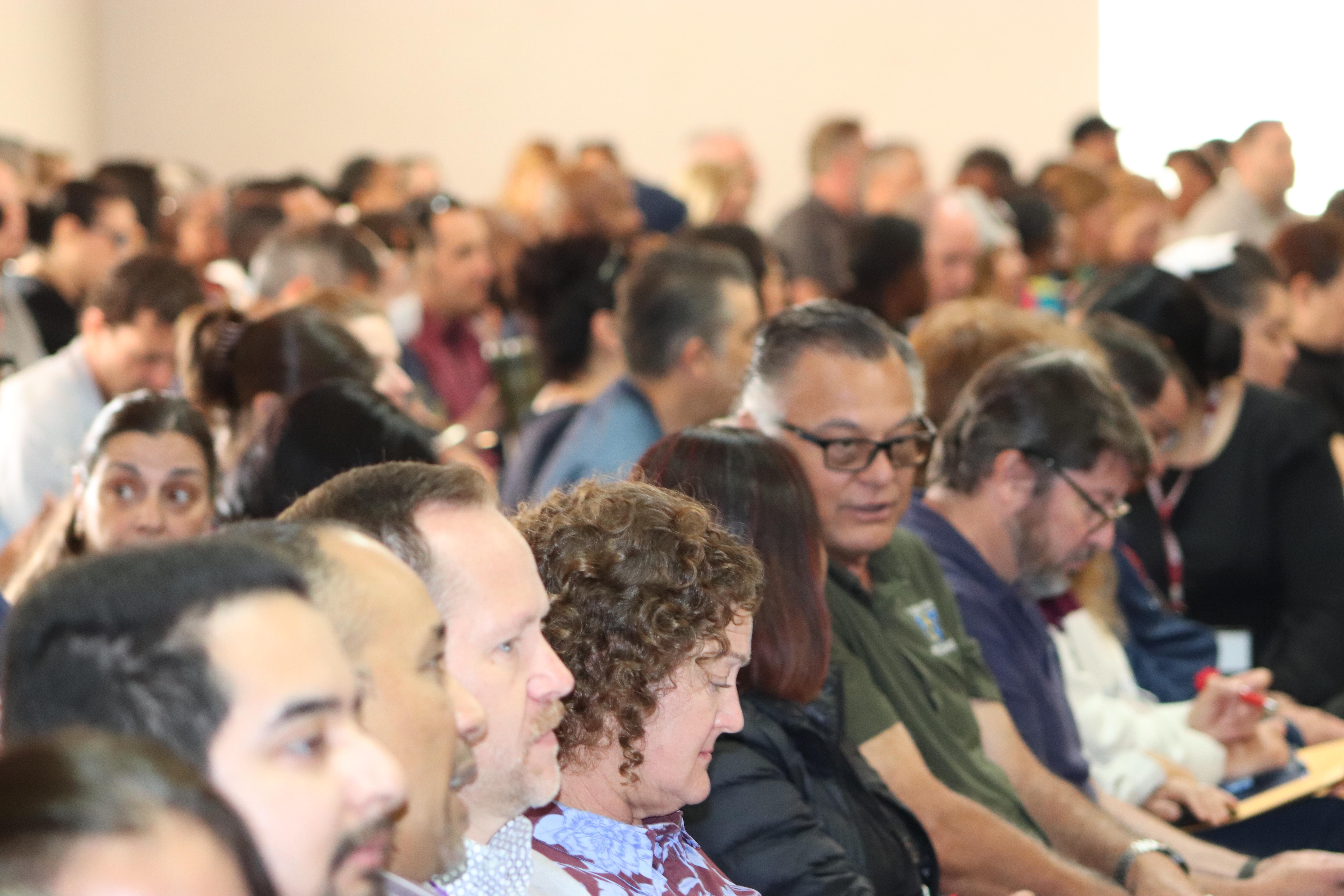
On March 25, 2026, San Diego Unified school district administrators, managers, and school leaders gathered for “The Undiscovered Country: Harnessing AI to Amplify Leadership Efficiency,” a professional learning conference hosted by the Administrators Association San Diego City Schools, AFSA Local 134, in partnership with San Diego Unified, offering a local lens on a national conversation.
Greetings from Jeffrey Thomas, president of AASD, welcomed participants and framed the conference as a rare chance to step back from daily responsibilities. “This event brings together administrators, managers, supervisors, and leaders. It is a special opportunity for us to step away from our daily responsibilities, come together as colleagues and focus on learning, leadership, and the future of education,” he said. Thomas emphasized that artificial intelligence is a defining shift that demands both curiosity and responsibility. “Like every major shift in education, AI brings both promise and responsibility. Today is an opportunity for us to explore how we can approach this moment thoughtfully, ethically, and with a commitment to supporting the students and communities we serve.”
Addressing the assembly of leaders, Superintendent of San Diego Unified Dr. Fabiola Bagula reflected on the challenges and complexity inherent in educational leadership. “Each of you carries a different title, but you share a common calling, to lead in service of others. And I want to begin simply with gratitude, gratitude for the quiet, consistent, often unseen work you do every single day, gratitude for the decisions you make when there’s no perfect answer, gratitude for the way you hold complexity with professionalism, with care, and often with a steady smile, for all of the families and staff who depend on you.”
She acknowledged the difficult circumstances leaders have navigated. “You have led through budget reductions, you have led through negotiations, you have led through uncertainty, through shifting expectations, through moments that sometimes ask more of you than seems reasonable, and still you show up, you serve and you care. That matters more than I can fully express.”
Dr. Bagula then invited leaders to embrace adaptability. “Leadership is not about perfection. It’s about nimbleness, the ability to adjust without losing your center, or to respond without abandoning your values, to move and shift and sometimes recalibrate and still remain grounded in who you are and why you lead. That’s not easy work, but that is the work of real leadership.”
Turning to the conference theme, she described AI as both an opportunity and a cautionary tale. “The last huge tech revolution was social media, and we have some data as to what it caused to our society, more misinformation, more divisiveness, and more isolation. AI also has the ability to amplify these three negative things. So how might we take from that experience and begin to intervene in design?” She emphasized that AI is immediate, not theoretical. “Artificial intelligence is not a distant concept anymore. It’s here, it’s present, and it’s accelerating. And I believe it offers us something important, if we approach it thoughtfully.”
Dr. Bagula framed AI as a tool to free leaders for what truly matters. “AI has the potential to support us with the transactional, the tasks, the systems, the workflows, the things that take time and energy but don’t necessarily require the fullness of our humanity. And if we leverage it well, it can give us something incredibly valuable in return, time. Time to be present, time to listen, time to build relationships, time to lead in the ways that only humans can. Because no matter how advanced technology becomes, it cannot replace what you bring, your judgment, your empathy, your ability to read a room, to understand a student, to support a colleague, to navigate a difficult conversation with care and dignity.”
She concluded with a call to curiosity and grounding. “So as you move through today’s learning, I invite you to hold both curiosity and grounding. Be curious about what is possible. Be open to new tools, new thinking, new ways of working, and at the same time, stay grounded in what we know to be true, that leadership is not a title, it is a practice. That’s how we show up, that’s how we lead, and at the heart of this work will always be people. Even in complexity, even in uncertainty, there’s still so much to discover.”
The event also highlighted the collaborative nature of AASD and the local educational community. UASC/AASD Executive Director Donis Coronel, who also serves as AFSA Executive Vice President, welcomed participants and framed the conference as part of a broader commitment to support administrators. She made it clear that Silvia Martinez and Steve Ditto, Co-Chairs of the AASD Professional Development Committee, alongside committee members Lucille Ciudad Real, Julie Garcia, Bernie Kacijancic, Lauren Robinson, Derek Suzuki, and Jeff Thomas, ensured that sessions would move beyond theory, offering practical strategies and real-world examples while creating space for open dialogue about both opportunities and challenges.
“Our goal is not simply to explore what AI can do, but to thoughtfully examine what it should do within our district, how it can support leaders without replacing the professional judgment and relationships that are at the heart of education,” said Martinez.
As Ditto reflected, the conference aimed to equip leaders to harness AI thoughtfully. “We wanted the conference to provide practical strategies, highlight real-world examples, and create space for open dialogue about both the opportunities and the challenges AI presents.”
By the day’s conclusion, attendees were left with both inspiration and actionable insights. The conference reinforced that while AI represents a new frontier, leadership remains human at its core, rooted in relationships, guided by values, and strengthened by the willingness to adapt, collaborate, and lead forward together. Dr. Bagula’s words offered a final guiding principle. “Be curious about what is possible and at the same time, stay grounded in what we know to be true, that leadership is not a title, it is a practice. Even in complexity, even in uncertainty, there’s still so much to discover.”